Longevity Science
NMN (nicotinamide mononucleotide) is the most direct precursor to NAD+, the coenzyme your cells require for energy production, DNA repair, and metabolic regulation. By your 40s, NAD+ levels have dropped 30–50% from peak. Here's what the clinical evidence actually says.
Key Takeaways
- NMN is a direct precursor to NAD+, an essential coenzyme involved in over 500 cellular reactions.
- By middle age, NAD+ levels are 30–50% below peak — correlating directly with metabolic health status.
- Human clinical trials show 250–500mg NMN per day increases NAD+ by approximately 40%, safely and sustainably.
- NMN has its own dedicated cellular transporter (Slc12a8), giving it preferential uptake over other precursors.
- Benefits include mitochondrial support, muscle insulin sensitivity, vascular health, and measurable endurance improvements.
What is NMN?
In the past two decades, the scientific and medical community has focused increasing attention on one molecule: nicotinamide adenine dinucleotide (NAD+). Specifically, on the potential health consequences of losing it — about half our total NAD+ by middle age — and whether supplementation with NAD+ precursors can meaningfully restore it.
NMN is a nucleotide: a molecular structure made up of a nitrogenous base (nicotinamide), a sugar (ribose), and a phosphate group. Its primary role in the cell is as an intermediate in the creation of NAD+. It's found in the nucleus, mitochondria, and cytoplasm — and while small amounts exist in foods like edamame, broccoli, and avocado, dietary sources are insufficient to meaningfully restore age-related NAD+ decline.
−40–50%
Decline in NAD+ levels by middle age vs. peak
Why NAD+ declines — and why it matters
NAD+ is present in every living cell and plays an essential role in cellular energy metabolism and mitochondrial function. Without adequate NAD+, energy production, DNA repair, sirtuin activation, and hundreds of critical cellular processes degrade simultaneously. You don't feel a single deficiency — you feel a systemic slowdown.
A landmark study published in Nature Aging profiled metabolites in muscle tissue from younger and older adults. NAD+ was among the most depleted metabolites in older adults. In physically impaired older adults, depletion was especially pronounced. Adults maintaining rigorous exercise regimens had NAD+ levels comparable to young adults — confirming a direct association between NAD+ abundance and healthy aging status.
How NMN becomes NAD+
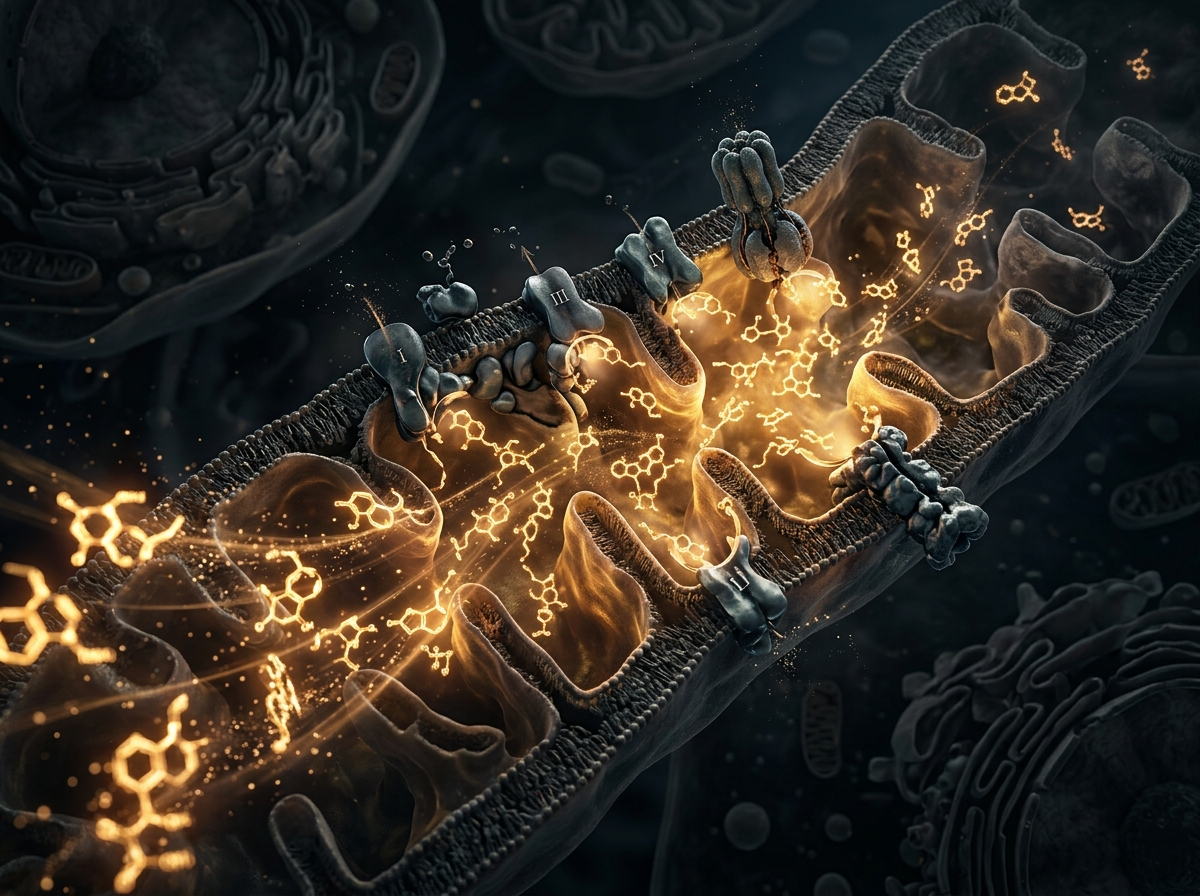
There are three independent pathways to generate NAD+: the kynurenine (de novo) pathway from dietary tryptophan; the Preiss-Handler pathway from nicotinic acid; and the NAD+ salvage pathway, which repurposes nicotinamide (NAM) as a byproduct of NAD+-consuming enzymes. NMN is an essential stop within the salvage pathway — it's what NR (nicotinamide riboside) converts to inside the cell before becoming NAD+.
Critically, NMN has been shown to have its own dedicated cellular transporter — Slc12a8 — allowing it to enter cells directly. This transporter is highly expressed in the small intestine, suggesting NMN may offer unique tissue-specific advantages in NAD+ repletion over other precursors.
The bypass advantage
Both NMN and NR bypass what's called the "rate-limiting step" in NAD+ biosynthesis. This is clinically significant: it means supplementation can increase NAD+ levels regardless of whether the endogenous synthetic pathways are functioning optimally — which they typically are not in aging adults.
What the clinical trials show
A study published in Frontiers in Nutrition demonstrated that 250mg NMN per day given to healthy adults increased NAD+ levels by approximately 40%, safely and sustainably over 12 weeks. When supplementation stopped, NAD+ levels returned to baseline — confirming both efficacy and reversibility.
Yoshino et al., published in Science, showed that oral NMN supplementation provided measurable metabolic benefits to aged women with prediabetes — specifically improving muscle insulin sensitivity. Liao et al. in the Journal of the International Society of Sports Nutrition demonstrated that NMN supports oxygen utilization in middle-aged runners, corroborating preclinical findings on aerobic endurance.
Benefits: what the evidence supports
- Mitochondrial health — NMN supports ATP synthesis efficiency at the organelle level, directly improving cellular energy output.
- Muscle insulin sensitivity — Demonstrated in human clinical trial (Yoshino et al., Science).
- Aerobic endurance — Improved oxygen utilization in middle-aged athletes (Liao et al., JISSN).
- Vascular health — Animal studies show improved blood flow and arterial function in aged models.
- Cognitive function — Preclinical data shows enhanced cognition in aged animal models; human trials ongoing.
- DNA repair capacity — NAD+ is required by PARP enzymes; restoring NAD+ supports repair of accumulated DNA damage.
On Dosing
OMD Sanctum NMN delivers 500mg per serving — double the dose used in the primary published human NAD+ elevation trials (250mg). This reflects both the clinical literature and the reality that bioavailability may vary with gut health, age, and transporter expression. Our formulation uses pharmaceutical-grade NMN with no excipients or fillers that would compromise absorption.
Is NMN safe?
No adverse events were reported in any published human NMN trial to date. No study of NAD+ elevation in humans has reported serious side effects of any kind. Like any intervention, long-term tracking of NAD+ upregulation in humans is ongoing — but the short and medium-term safety profile across multiple independent trials is consistent and reassuring.
The bottom line
NMN is not a trend supplement. It is the most direct, bioavailable precursor to the coenzyme your cells use to produce energy, repair DNA, activate sirtuins, and regulate metabolism. The clinical evidence for NAD+ restoration via NMN is among the strongest available for any longevity intervention in humans. The variable isn't whether it works — it's whether your formulation is pharmaceutical-grade and dosed to match the protocol where efficacy was demonstrated.
References
- Yoshino M, et al. (2021). Nicotinamide mononucleotide increases muscle insulin sensitivity in prediabetic women. Science, 372(6547), 1224–1229.
- Liao B, et al. (2021). NMN supplementation enhances aerobic capacity in amateur runners. Journal of the International Society of Sports Nutrition, 18(1), 54.
- Grozio A, et al. (2019). Slc12a8 is a nicotinamide mononucleotide transporter. Nature Metabolism, 1, 47–57.
- Elhassan YS, et al. (2019). Nicotinamide riboside augments the aged human skeletal muscle NAD+ metabolome. Cell Reports, 28(7), 1717–1728.
- Massudi H, et al. (2012). Age-associated changes in oxidative stress and NAD+ metabolism in human tissue. PLOS ONE, 7(7).